
IT Event Management Process is a part of IITSM Service Operation.
This document contains detailed description of the IT Event Management Process, including:
• Key definitions
• Purpose and Objectives
• Scope
• Value to business
• Types and Categories of events
• Process Workflow – step by step
• Triggers
• Process Inputs / Outputs/ Interfaces
• Designing for Event Management
• Challenges
• Risks
• Critical success factors (CSF)
• Key Performance Indicators (KPIs)
• Process Interfaces
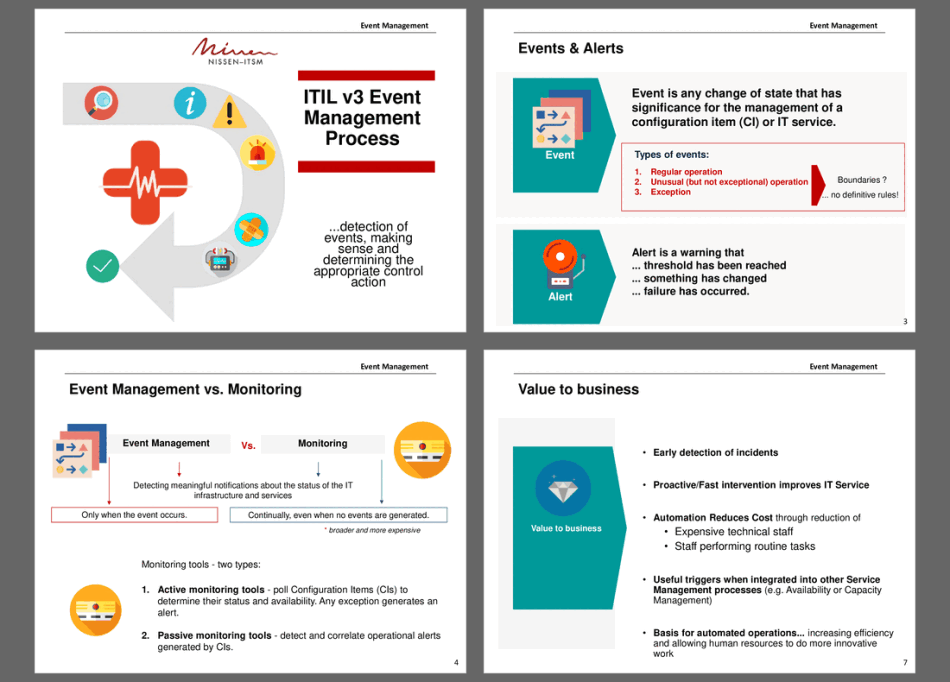
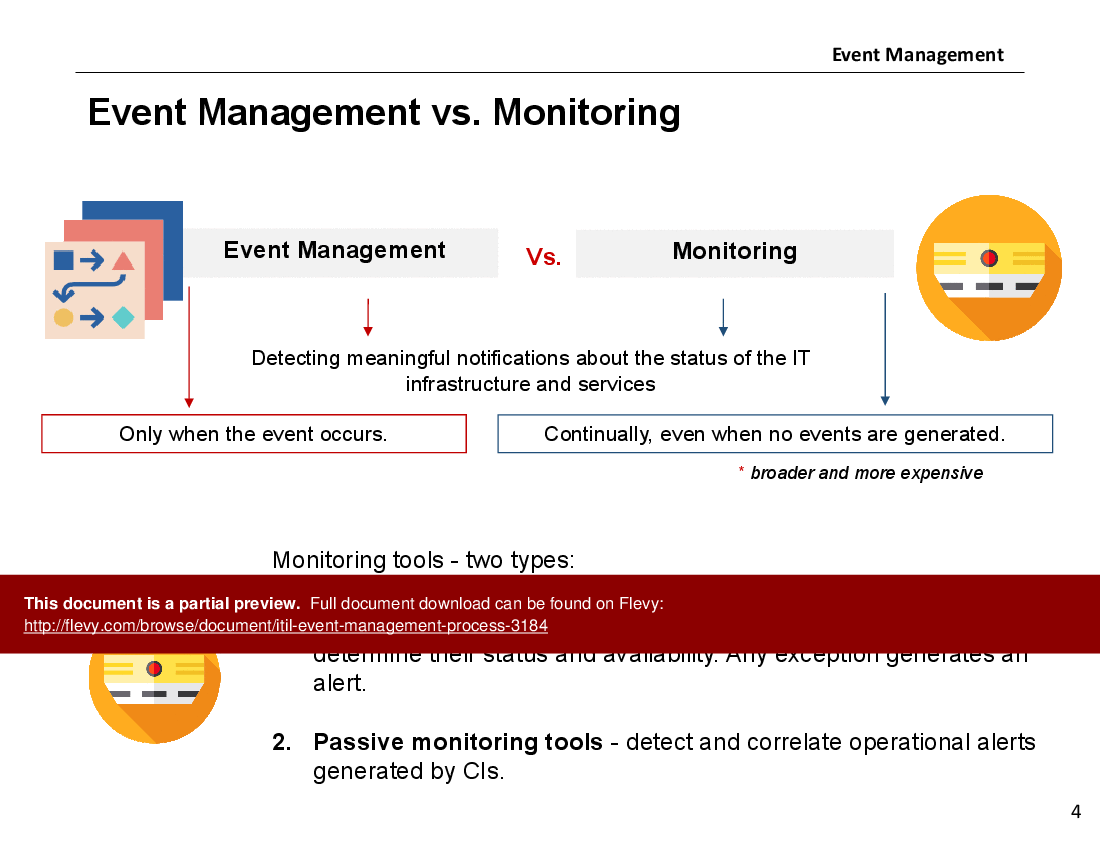
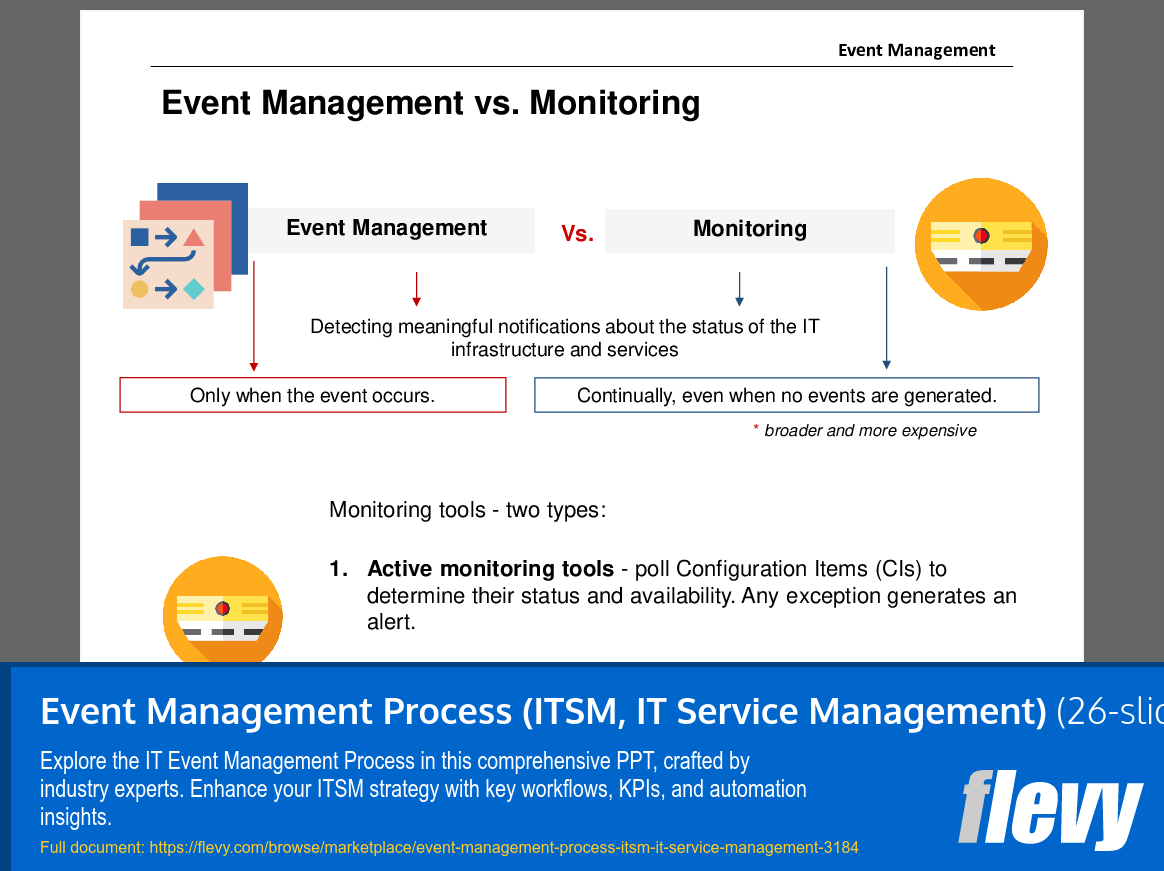
This comprehensive PPT on Event Management Process within IT Service Management (ITSM) dives into the critical distinctions between event management and monitoring. It emphasizes the importance of detecting meaningful notifications about the IT infrastructure status only when events occur, as opposed to continuous monitoring. This approach ensures cost-effectiveness and precision in managing IT events.
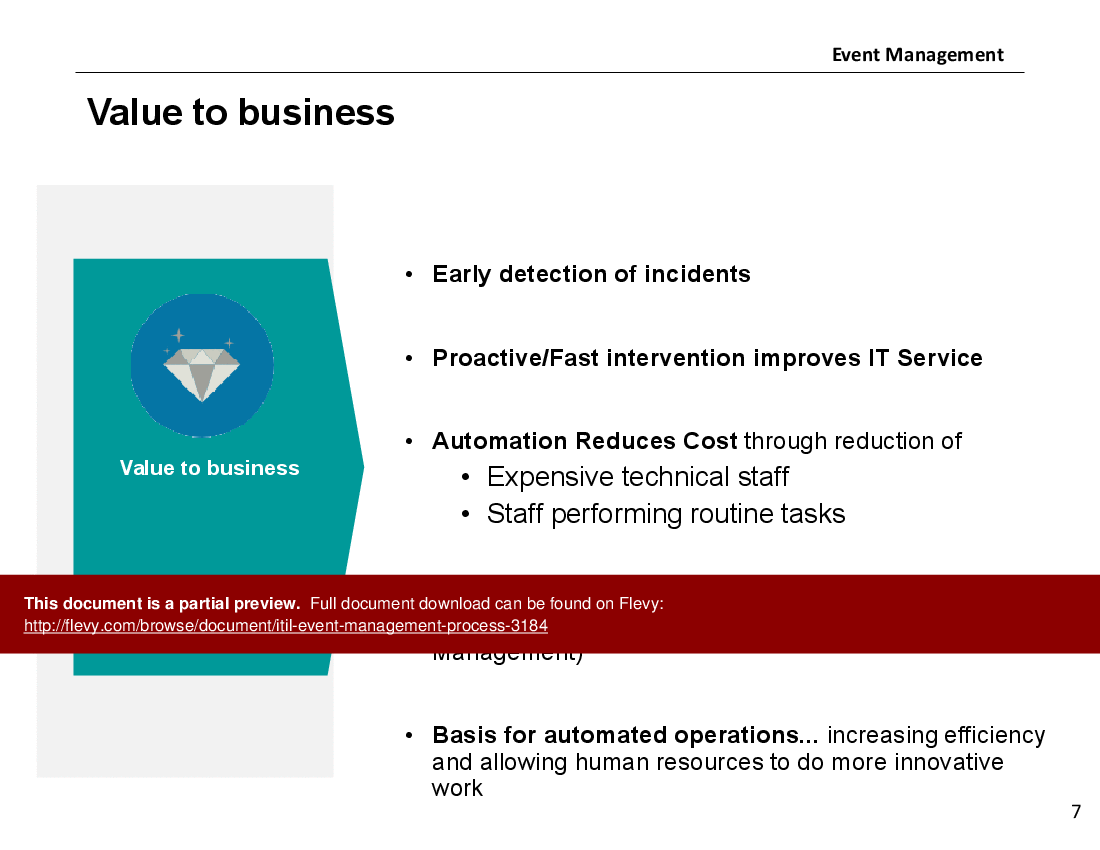
The PPT elaborates on the significant value event management brings to businesses, including early incident detection, proactive intervention, and cost reduction through automation. By automating routine tasks, organizations can allocate human resources to more innovative work, enhancing overall operational efficiency. This strategic focus on automation and proactive measures underscores the document's practical approach to improving IT service management.
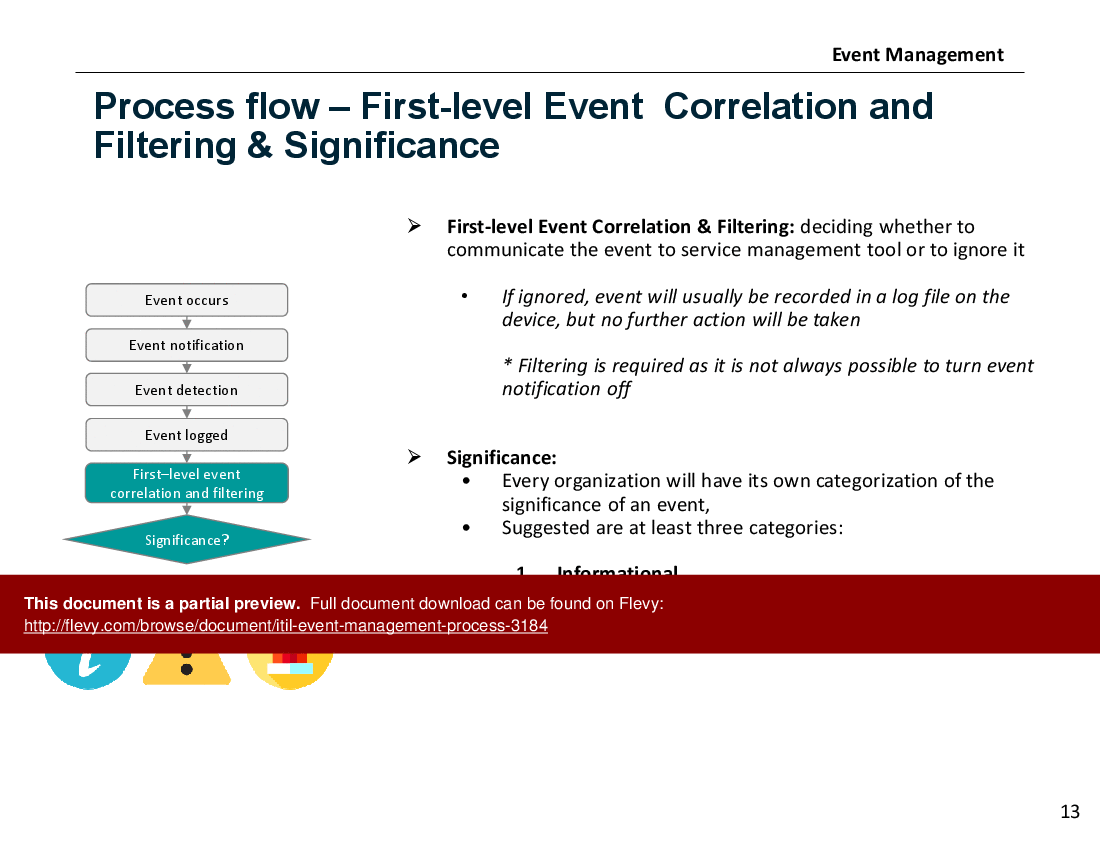
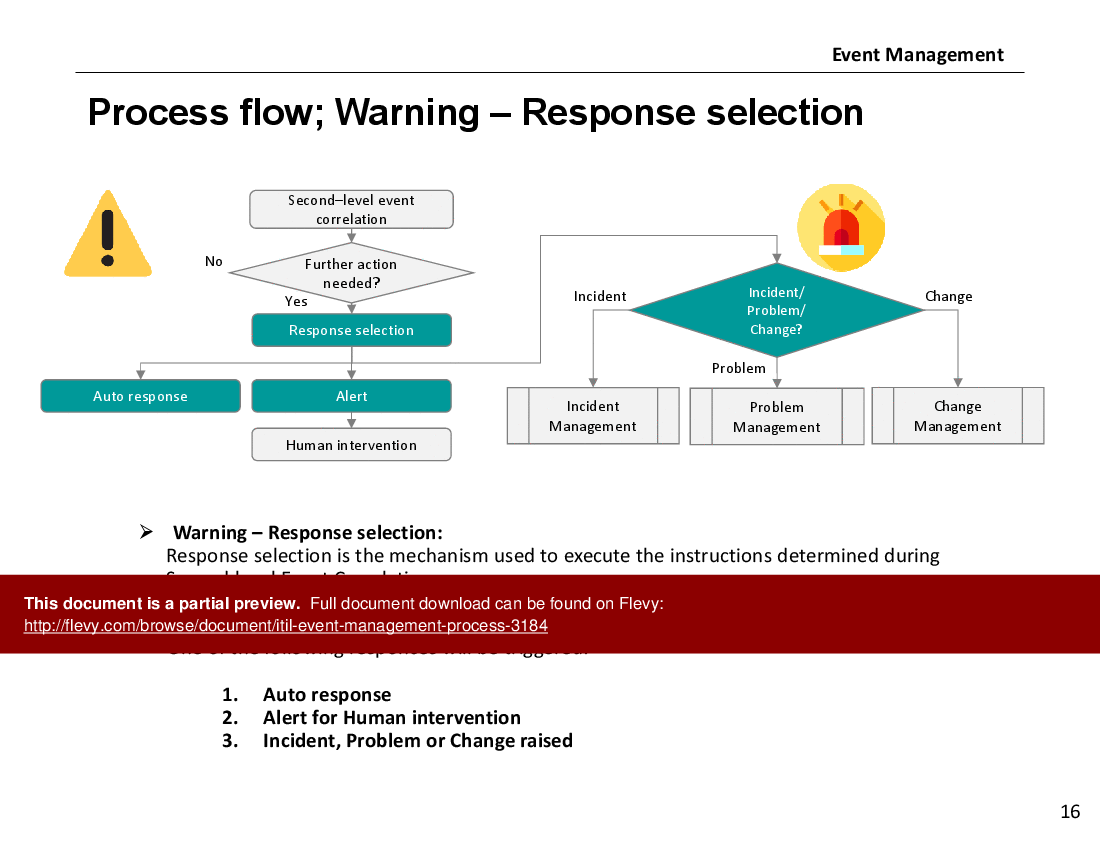
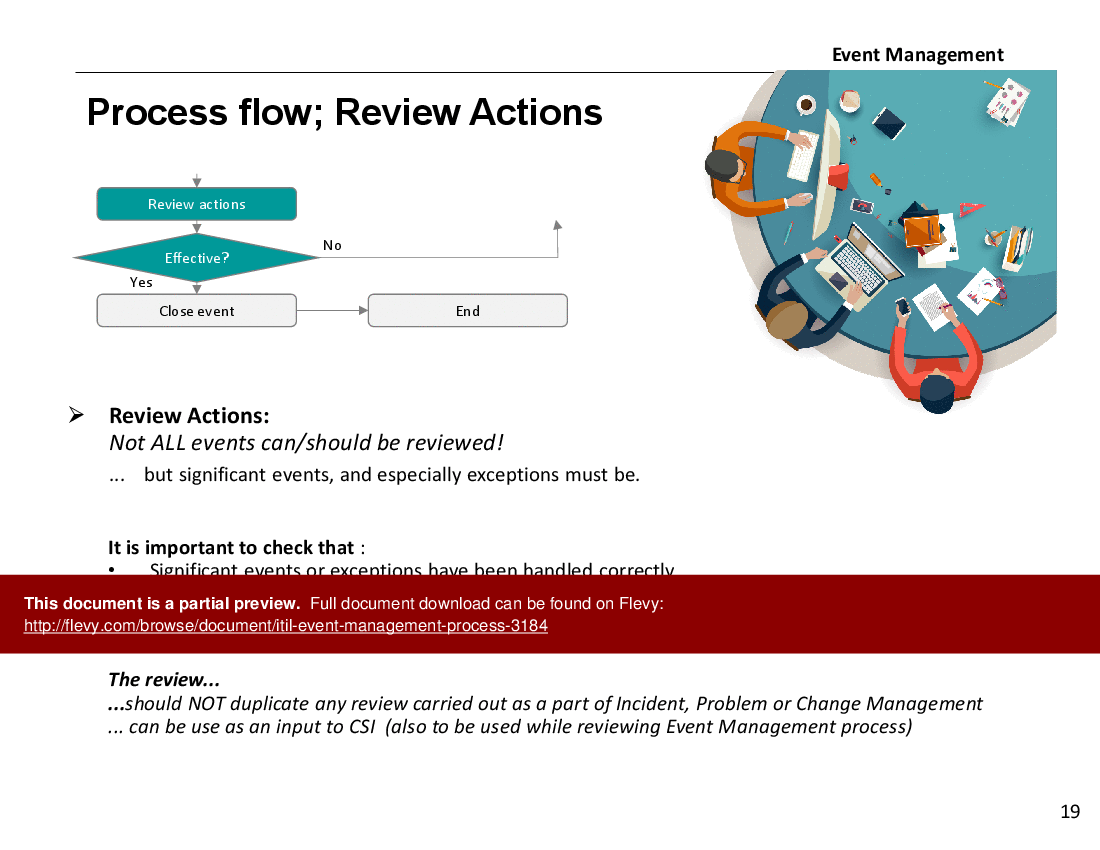
Detailed process workflows are meticulously outlined, from event occurrence to response selection and review actions. The document provides a high-level representation of event management, ensuring clarity in understanding the sequence of actions and decision points. This structured approach aids in identifying and addressing incidents, problems, and changes effectively, reinforcing the document's utility for IT service managers aiming to streamline their event management processes.
Got a question about the product? Email us at support@flevy.com or ask the author directly by using the "Ask the Author a Question" form. If you cannot view the preview above this document description, go here to view the large preview instead.
Executive Summary
This presentation on the ITIL v3 Event Management Process provides a comprehensive overview of event management within IT Service Management (ITSM). It outlines the critical steps for detecting, analyzing, and responding to events that impact configuration items (CIs) and IT services. By utilizing this PPTX, IT service teams will gain insights into the purpose, objectives, and workflows associated with effective event management, enabling them to enhance operational efficiency and improve service delivery.
Who This Is For and When to Use
• IT Service Managers overseeing event management processes
• IT Operations teams responsible for monitoring and incident response
• ITIL practitioners seeking to implement or refine event management practices
• Business analysts focused on improving IT service performance
Best-fit moments to use this deck:
• During ITIL training sessions to educate teams on event management principles
• In workshops aimed at refining existing event management processes
• When developing or updating IT service management frameworks
Learning Objectives
• Define the key concepts and terminology related to event management in ITIL
• Establish the objectives and value of implementing an event management process
• Identify the types and categories of events and their significance
• Describe the workflow for event detection, notification, and response
• Analyze the challenges and critical success factors for effective event management
• Develop key performance indicators (KPIs) to measure event management success
Table of Contents
• Key Definitions (page 1)
• Purpose and Objectives (page 5)
• Scope (page 6)
• Value to Business (page 7)
• Types & Categories of Events (page 8)
• Process Workflow (page 10)
• Designing for Event Management (page 21)
• Challenges (page 22)
• Critical Success Factors & KPIs (page 23)
• Risks (page 24)
• Process Interfaces (page 25)
Primary Topics Covered
• Key Definitions - Understanding the fundamental terms related to event management, including events and alerts.
• Purpose and Objectives - Outlining the goals of event management, including detection and analysis of events.
• Scope - Identifying areas within IT service management where event management can be applied and automated.
• Value to Business - Highlighting the benefits of early incident detection and proactive intervention.
• Types & Categories of Events - Classifying events into informational, warning, and exception categories.
• Process Workflow - Detailing the steps involved in the event management process, from detection to resolution.
Deliverables, Templates, and Tools
• Event management process workflow diagram
• Event categorization templates for tracking informational, warning, and exception events
• KPI tracking templates to measure event management effectiveness
• Guidelines for designing event management systems and tools
• Risk assessment templates for identifying potential challenges in event management
Slide Highlights
• Overview of event management definitions and key concepts
• Detailed workflow diagram illustrating the event management process
• Examples of different types of events and their implications
• Insights into the value of effective event management for business operations
• Challenges and critical success factors for successful implementation
Potential Workshop Agenda
Introduction to Event Management (30 minutes)
• Overview of event management concepts and terminology
• Discussion on the importance of event management in ITSM
Event Management Process Workflow (60 minutes)
• Detailed walkthrough of the event management process
• Group activity to map out event scenarios and responses
Challenges and Success Factors (45 minutes)
• Identifying common challenges in event management
• Brainstorming session on critical success factors and KPIs
Customization Guidance
• Tailor event categorization examples to fit specific organizational needs
• Adjust the workflow diagram to reflect unique internal processes
• Incorporate organization-specific KPIs for measuring event management success
Secondary Topics Covered
• Integration of event management with incident, problem, and change management
• The role of automation in enhancing event management efficiency
• Strategies for continuous improvement in event management processes
• Risk management practices related to event management
Topic FAQ
Document FAQ
These are questions addressed within this presentation.
What is the purpose of event management in ITIL?
Event management aims to detect significant changes in the state of configuration items and IT services, enabling proactive responses to maintain service quality.
What types of events are identified in this presentation?
Events are categorized as informational, warning, or exceptions, each requiring different levels of response and management.
How can organizations measure the effectiveness of their event management processes?
Organizations can establish key performance indicators (KPIs) to track the number of events, response times, and the effectiveness of interventions.
What challenges might organizations face in implementing event management?
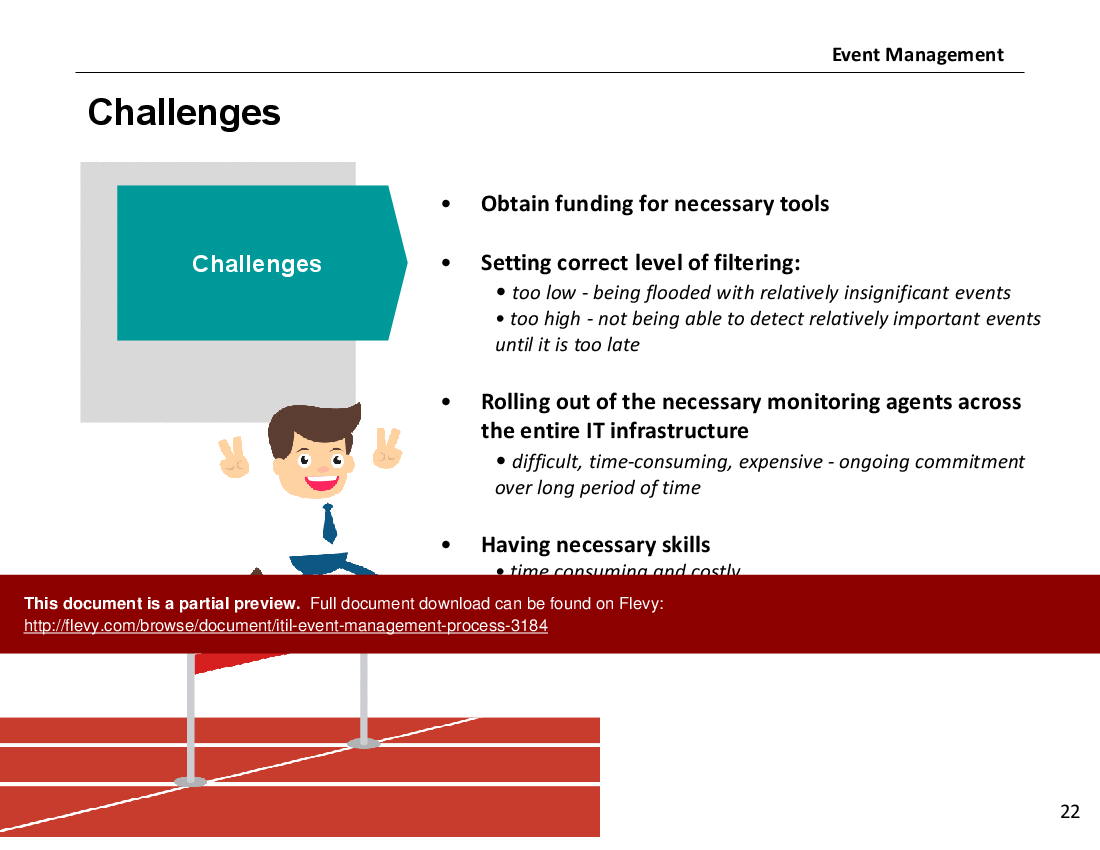
Common challenges include obtaining adequate funding, setting the correct level of event filtering, and ensuring effective integration with other ITSM processes.
How does event management interface with other ITSM processes?
Event management can interface with incident, problem, and change management processes, enhancing overall service management effectiveness.
What is the significance of categorizing events?
Categorizing events helps prioritize responses and allocate resources effectively, ensuring that critical issues are addressed promptly.
What are critical success factors for effective event management?
Key success factors include securing funding, integrating event management into service processes, and maintaining momentum in rolling out monitoring tools.
How can organizations improve their event management processes over time?
Organizations should engage in continual service improvement practices, regularly reviewing and refining event management processes based on performance data and feedback.
Glossary
• Event - Any change of state that has significance for the management of a configuration item (CI) or IT service.
• Alert - A warning that indicates a threshold has been reached, something has changed, or a failure has occurred.
• Configuration Item (CI) - Any component that needs to be managed in order to deliver an IT service.
• Incident Management - The process responsible for managing the lifecycle of all incidents.
• Problem Management - The process responsible for managing the lifecycle of all problems.
• Change Management - The process responsible for controlling the lifecycle of all changes.
• Key Performance Indicator (KPI) - A measurable value that demonstrates how effectively an organization is achieving key business objectives.
• Service Level Agreement (SLA) - A commitment between a service provider and a client regarding the expected level of service.
• Monitoring Tools - Tools used to detect and correlate operational alerts generated by configuration items.
• Automation - The use of technology to perform tasks with minimal human intervention.
• Service Management - A set of specialized organizational capabilities for providing value to customers in the form of services.
• Continual Service Improvement (CSI) - An ongoing process to improve the quality of services and the efficiency of service management processes.
• Threshold - A predefined limit that triggers an alert when exceeded.
• Operational Monitoring - The process of tracking the performance and availability of IT services and infrastructure.
• Service Assurance - The process of ensuring that services are delivered as promised and meet agreed-upon standards.
• Event Correlation - The process of analyzing and interpreting events to determine their significance and required actions.
• Filtering - The process of deciding which events to communicate to service management tools and which to ignore.
• Review Actions - The process of assessing whether significant events have been handled correctly and efficiently.
• Business Process - A collection of related tasks that produce a specific service or product for a customer.
• Risk Management - The process of identifying, assessing, and controlling risks to minimize their impact on the organization.
Source: Best Practices in SLM, ITSM PowerPoint Slides: Event Management Process (ITSM, IT Service Management) PowerPoint (PPTX) Presentation Slide Deck, ITSM Consulting
This document is available as part of the following discounted bundle(s):

Save %!
IT Service Operation - 5 Processes
This bundle contains 5 total documents. See all the documents to the right.
|
Download our FREE Strategy & Transformation Framework Templates
Download our free compilation of 50+ Strategy & Transformation slides and templates. Frameworks include McKinsey 7-S Strategy Model, Balanced Scorecard, Disruptive Innovation, BCG Experience Curve, and many more. |









